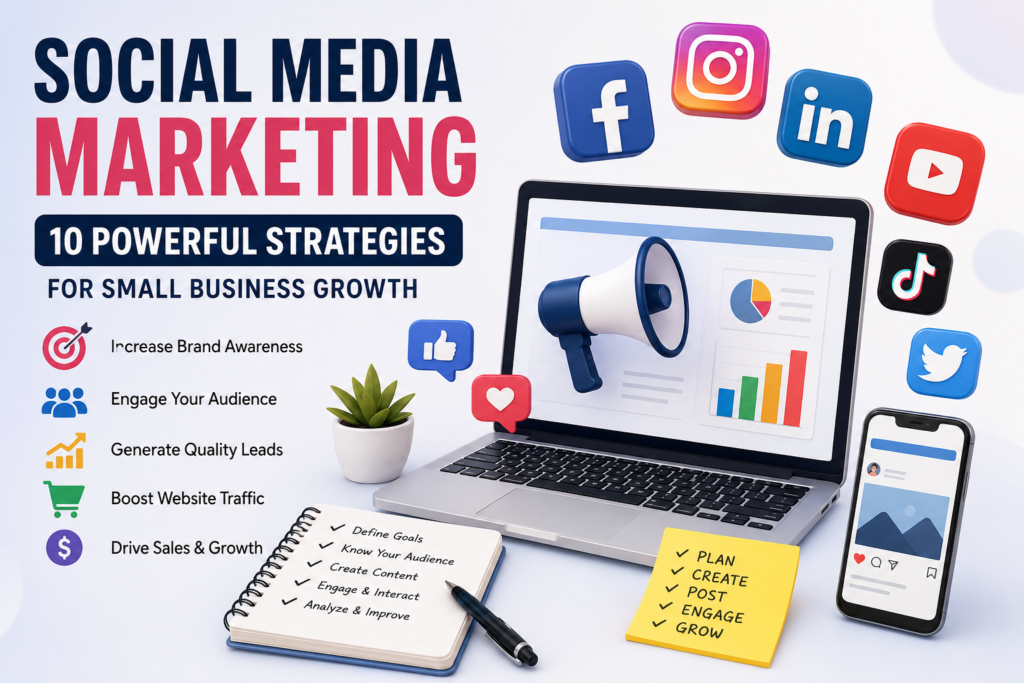
Social Media Marketing: 10 Powerful Strategies for Small Business Growth
Social Media Marketing has become one of the most effective ways for small businesses to connect with customers, build brand awareness, and increase sales. With billions of users actively engaging on platforms such as Facebook, Instagram, LinkedIn, X, and Pinterest, businesses have an incredible opportunity to reach their target audience without spending a fortune on advertising.
For small businesses, social media is not just a marketing channel; it is a powerful tool for building relationships, creating trust, and driving long-term growth. In this article, we will explore the most effective strategies that small businesses can use to achieve success through social media.
What is Social Media Marketing?
Social Media Marketing is the process of using social media platforms to promote products, services, and brands. It involves creating engaging content, interacting with followers, running advertising campaigns, and analyzing performance metrics.
The goal is to attract potential customers, increase engagement, and encourage people to take action, such as visiting a website, making a purchase, or contacting the business.
Why Social Media Matters for Small Businesses
Small businesses often operate with limited marketing budgets. Social media provides a cost-effective way to reach large audiences and compete with bigger brands.
Unlike traditional advertising methods, social media allows businesses to communicate directly with customers. This direct interaction helps build trust and improve customer relationships.
Businesses that actively use social platforms often experience higher brand recognition, increased customer loyalty, and improved sales opportunities.
Social Media Marketing Strategy 1: Define Clear Goals
Every successful marketing campaign starts with clear objectives. Before posting content, businesses should identify what they want to achieve.
Common goals include:
- Increasing brand awareness
- Generating leads
- Driving website traffic
- Growing followers
- Increasing sales
Clear goals help businesses measure success and focus on activities that deliver results.
Social Media Marketing Strategy 2: Understand Your Target Audience
Knowing your audience is essential for creating relevant content. Businesses should identify:
- Age group
- Location
- Interests
- Buying behavior
- Preferred social platforms
Understanding customer preferences helps businesses create content that resonates with their audience and encourages engagement.
Social Media Marketing Strategy 3: Choose the Right Platforms
Not every platform is suitable for every business.
Facebook is excellent for community building and local businesses.
Instagram works well for fashion, beauty, food, and lifestyle brands.
LinkedIn is ideal for B2B companies and professional services.
Pinterest is useful for creative businesses, home decor, and e-commerce brands.
Selecting the right platform ensures marketing efforts reach the intended audience.
Social Media Marketing Strategy 4: Create High-Quality Content
Content is the foundation of every successful social media strategy.
Businesses should focus on creating:
- Educational posts
- Product demonstrations
- Customer testimonials
- Industry tips
- Behind-the-scenes content
- Videos and reels
High-quality content increases engagement and encourages users to share posts with others.
Benefits of Social Media Marketing for Brand Awareness
One of the biggest advantages of Social Media Marketing is increased brand visibility.
Consistent posting helps businesses remain visible to their audience. Over time, customers become familiar with the brand, making them more likely to choose it when making purchasing decisions.
Strong brand awareness also helps businesses establish credibility within their industry.
Social Media Marketing Strategy 5: Maintain Consistent Posting
Consistency is important for audience engagement.
Businesses should create a content calendar to schedule posts regularly. Posting consistently keeps followers interested and increases visibility on social platforms.
A content calendar helps businesses maintain organization and avoid long periods of inactivity.
Social Media Marketing Strategy 6: Engage with Your Audience
Social media is a two-way communication channel.
Businesses should respond to comments, messages, and reviews promptly. Engaging with followers helps build stronger relationships and demonstrates that the business values customer feedback.
Active engagement also improves trust and customer satisfaction.
Social Media Marketing Strategy 7: Use Video Content
Video content continues to dominate social media platforms.
Short-form videos, reels, tutorials, and live streams often receive higher engagement compared to static images.
Video content helps businesses explain products, showcase services, and connect with audiences more effectively.
Social Media Marketing Strategy 8: Leverage Paid Advertising
Organic reach can be limited on some platforms. Paid advertising helps businesses reach larger audiences and target specific demographics.
Social media advertising allows businesses to target users based on age, interests, location, and online behavior.
Even small budgets can generate significant results when campaigns are properly optimized.
Measuring Success with Social Media Marketing
Tracking performance is essential for improving results.
Businesses should monitor:
- Reach
- Engagement
- Click-through rate
- Website traffic
- Lead generation
- Conversion rate
Analytics tools provide valuable insights that help businesses refine their strategies and improve campaign effectiveness.
Social Media Marketing Strategy 9: Collaborate with Influencers
Influencer partnerships can help businesses reach new audiences.
Working with relevant influencers increases credibility and exposes products or services to potential customers who trust the influencer’s recommendations.
Businesses should choose influencers whose audience aligns with their target market.
Social Media Marketing Strategy 10: Analyze and Improve Performance
Successful businesses continuously evaluate their marketing efforts.
Regular analysis helps identify what content performs best and which strategies need improvement.
Businesses should review performance reports and adjust their approach based on data rather than assumptions.
Common Mistakes to Avoid
Many businesses make avoidable mistakes when managing social media accounts.
Common mistakes include:
- Inconsistent posting
- Ignoring customer comments
- Posting overly promotional content
- Using low-quality images
- Failing to track analytics
Avoiding these mistakes can significantly improve results and audience engagement.
The Future of Social Media
Social media continues to evolve rapidly. Artificial intelligence, short-form video content, personalized experiences, and social commerce are shaping the future of digital marketing.
Businesses that adapt to new trends and technologies will have a competitive advantage in attracting and retaining customers.
Conclusion
Social Media Marketing remains one of the most powerful tools available to small businesses. By setting clear goals, understanding the target audience, creating valuable content, engaging with customers, and analyzing performance, businesses can build strong online communities and achieve sustainable growth.
Small businesses that invest time and effort into social media can increase brand awareness, generate leads, strengthen customer relationships, and drive long-term success. With the right strategy and consistent execution, social media can become a major driver of business growth.
Frequently Asked Questions (FAQ)
What is Social Media Marketing?
Social Media Marketing is the process of promoting products, services, and brands through social media platforms such as Facebook, Instagram, LinkedIn, Pinterest, and X. It helps businesses increase visibility, engage with customers, and generate leads.
Why is Social Media Marketing important for small businesses?
Social Media Marketing allows small businesses to reach a larger audience, build brand awareness, connect with customers, and drive sales at a lower cost compared to traditional advertising methods.
Which social media platform is best for small businesses?
The best platform depends on the target audience and business type. Facebook is suitable for local businesses, Instagram works well for visual brands, LinkedIn is ideal for B2B companies, and Pinterest is useful for creative and e-commerce businesses.
How often should businesses post on social media?
Businesses should post consistently. Most experts recommend posting at least 3 to 5 times per week while maintaining quality and engagement.
Can Social Media Marketing increase sales?
Yes. Effective Social Media Marketing helps businesses attract potential customers, build trust, generate leads, and convert followers into paying customers through strategic content and advertising campaigns.
How can businesses measure social media success?
Businesses can track metrics such as reach, engagement, follower growth, website traffic, leads, and conversions using platform analytics and reporting tools.
Is paid advertising necessary for Social Media Marketing?
Paid advertising is not always required, but it can help businesses reach larger audiences, increase visibility, and achieve faster results when combined with organic content strategies.